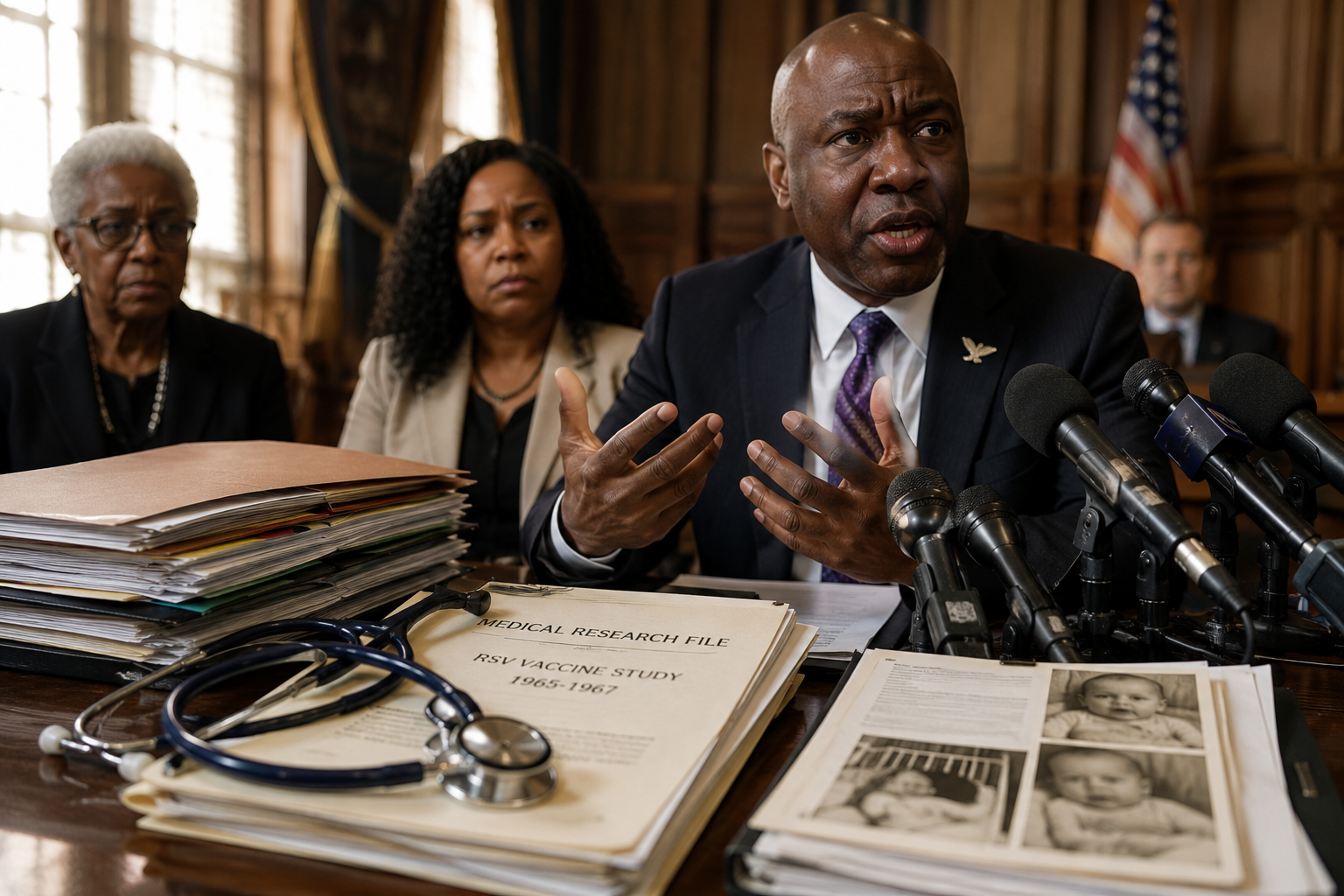

The RSV Vaccine Lawsuit filed in Washington, D.C., has brought renewed attention to a deeply troubling chapter in American medical history. Families of two Black infants who died nearly six decades ago are accusing the U.S. government of secretly using their children in experimental respiratory syncytial virus (RSV) vaccine testing without parental knowledge or consent.
The lawsuit has sparked national discussion about medical ethics, informed consent, government accountability, and the treatment of vulnerable communities during past medical research programs. Civil rights attorney Ben Crump and a team of lawyers are now seeking answers and accountability on behalf of the affected families.
Families File Federal Lawsuit Against the U.S. Government: RSV Vaccine Lawsuit
The legal complaint was filed under the Federal Tort Claims Act.
According to the lawsuit, the families of Ross Otto Hambrick and Victor Marcellus King believe their infants were enrolled in government-supported RSV vaccine experiments during 1965 and 1966 without informed consent from their parents. Both children later died in January 1967.
The lawsuit argues that federal agencies, including the National Institutes of Health (NIH), were involved in research linked to the experimental vaccine program.
What the Lawsuit Claims Happened: RSV Vaccine Lawsuit
At the center of the case is an experimental RSV vaccine referred to in legal documents as “Lot 100.”
The complaint alleges that the infants received injections connected to this vaccine trial and later developed severe illnesses. Attorneys representing the families claim the vaccine was highly concentrated and that the children became part of a government-backed testing effort without proper authorization from their parents.
The legal filing further claims the families remained unaware of the alleged testing for decades.
The Role of Ben Crump and the Legal Team: RSV Vaccine Lawsuit
Well-known civil rights attorney Ben Crump is leading the legal effort.
He is joined by attorneys:
- William H. Murphy Jr.
- Carol Lexing Powell
- Malcolm P. Ruff
- Nabeha Shaer
The legal team says the lawsuit is not only about financial damages but also about uncovering the truth behind how the infants were selected and whether government officials failed to obtain informed consent from their families.
Calls for Accountability
The attorneys are demanding:
- Full disclosure of government actions
- Accountability from federal agencies
- Financial damages for the families
- Greater transparency regarding historical medical research
According to Crump, the families deserve answers regarding what happened to their children and why they allegedly remained unaware of the circumstances for so many years.
Why the Case Has Drawn National Attention: RSV Vaccine Lawsuit
The lawsuit touches on several sensitive issues that continue to resonate today.
These include:
- Medical ethics
- Historical racial inequality
- Informed consent
- Government transparency
- Protection of research participants
Because the allegations involve Black infants from low-income families, the case has generated widespread public interest and emotional reactions.
Many observers see the lawsuit as part of a broader conversation about trust between communities and public health institutions.
How RSV Became Part of the Story: RSV Vaccine Lawsuit
Respiratory syncytial virus, commonly known as RSV, is a respiratory infection that can be especially dangerous for infants, older adults, and people with weakened immune systems.
Today, RSV prevention has become an important public health priority.
Modern RSV Vaccines Were Approved in 2023
According to the lawsuit, tissue samples collected during autopsies decades ago allegedly contributed to research that eventually helped support RSV vaccine development. Attorneys claim that RSV vaccines approved by the U.S. Food and Drug Administration (FDA) in 2023 benefited from knowledge gained through earlier research efforts.
Current FDA-approved RSV vaccines are designed to help protect vulnerable populations from severe disease. Public health agencies continue to monitor vaccine safety through multiple oversight systems.
Historical Questions Continue to Surface: RSV Vaccine Lawsuit
The lawsuit follows reporting and investigations that explored the history of RSV vaccine research conducted during the 1960s.
Reports referenced by the legal team suggest that records, including research notes, helped identify connections between the infants and experimental vaccine studies from that era.
These findings have raised difficult questions about research standards that existed before modern informed consent requirements became more strictly enforced.
Medical Research Rules Have Changed Significantly
Research protections today are far different from those that existed during the 1960s.
Modern clinical research generally requires:
- Detailed informed consent
- Independent ethics review boards
- Participant protections
- Regulatory oversight
- Safety monitoring procedures
These safeguards are intended to prevent abuses and ensure participants understand potential risks before joining studies.
Government Response Remains Limited: RSV Vaccine Lawsuit
As public attention around the lawsuit grows, many people are waiting to see how federal agencies respond.
Reports indicate that the federal government has not publicly addressed the allegations in detail.
Because the case is now moving through legal channels, additional information could emerge through court filings, evidence reviews, and future hearings.
The lawsuit may take considerable time before reaching a final outcome.
Why This Lawsuit Matters Beyond the Courtroom: RSV Vaccine Lawsuit
The case is about more than a legal dispute.
For many observers, it represents broader concerns about:
- Historical accountability
- Public trust in institutions
- Ethical medical research
- Equal treatment under healthcare systems
Families involved in the lawsuit argue that understanding what happened is necessary not only for justice but also for preventing similar situations in the future.
Public Health and Trust Remain Closely Connected
Health experts often emphasize that trust plays a critical role in successful public health efforts.
When communities believe healthcare systems are transparent and accountable, participation in medical programs generally improves.
Cases involving historical allegations can influence how people view government institutions, healthcare providers, and scientific research today.
That is one reason why this lawsuit has generated discussion far beyond the courtroom.
What Happens Next in the RSV Vaccine Lawsuit: RSV Vaccine Lawsuit
The legal process is still in its early stages.
Attorneys representing the families are seeking access to additional information and records connected to the alleged testing program. The court will ultimately evaluate the claims, evidence, and government responses before determining the next steps.
For now, the lawsuit continues to raise important questions about history, accountability, and the responsibilities of public institutions.
Final Thoughts
The RSV Vaccine Lawsuit has reopened difficult conversations about medical ethics, informed consent, and government accountability. Families of Ross Otto Hambrick and Victor Marcellus King are seeking answers nearly sixty years after the deaths of their children, arguing that they were never informed about alleged participation in experimental RSV testing.
As the legal case moves forward, many people will be watching closely to see what evidence emerges and whether the families receive the transparency and accountability they seek. Regardless of the final outcome, the lawsuit highlights the lasting importance of ethical standards in medical research and the need to protect vulnerable communities.
Read Other Interesting news here: Huawei Pura Phone