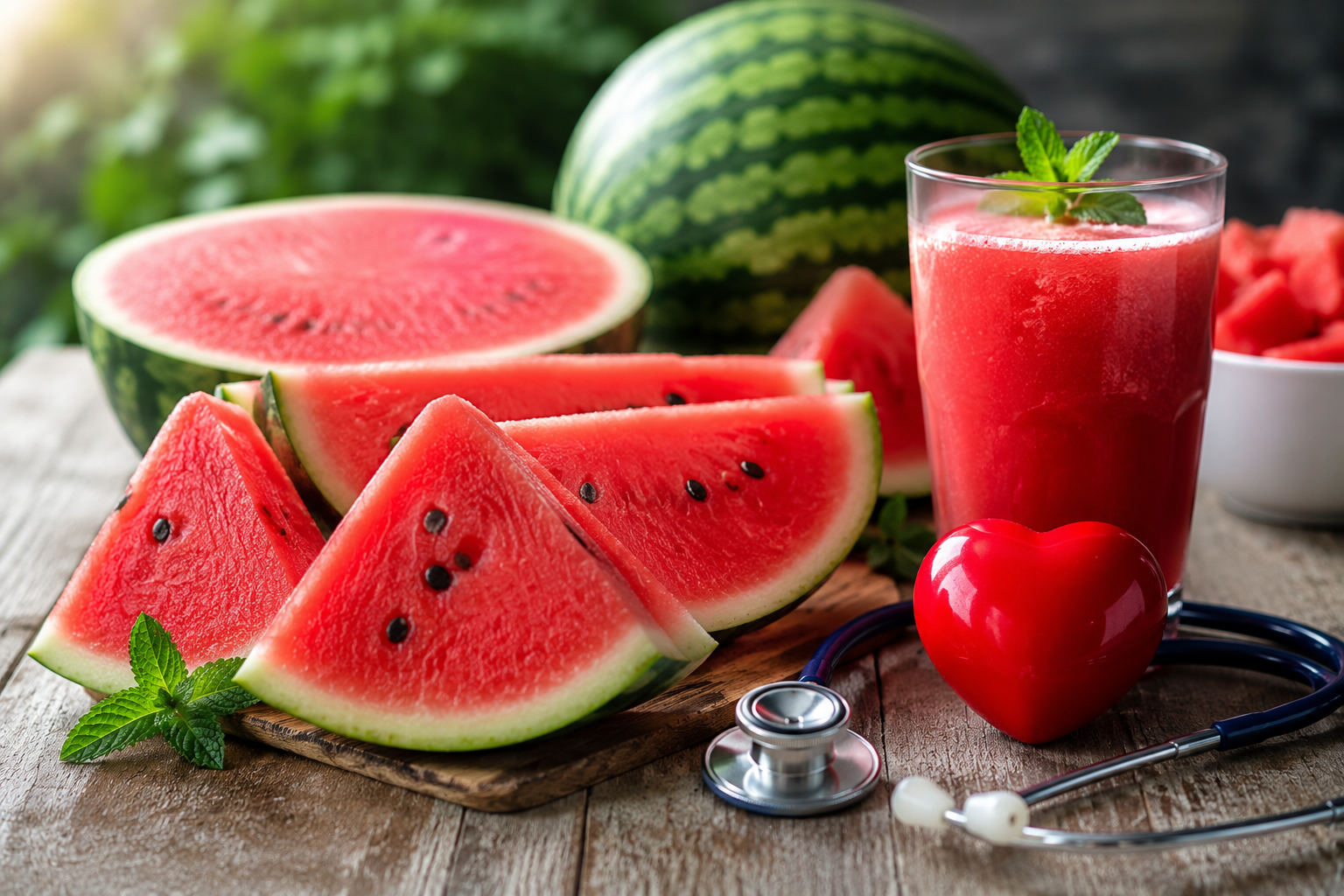

Summer often brings memories of cold watermelon slices, family gatherings, and refreshing snacks on hot afternoons.
But new research suggests the watermelon health benefits may go far beyond simple hydration.
Scientists are now exploring how watermelon could support heart health, improve diet quality, and provide important nutrients that many people do not get enough of every day.
Recent studies published in Nutrients found that people who regularly eat watermelon often have healthier diets overall. Researchers also discovered that watermelon juice may help support blood vessel function and cardiovascular health.
As interest in natural nutrition continues growing, watermelon is gaining attention as more than just a popular summer fruit.
Why Scientists Are Studying Watermelon More Closely: watermelon health benefits
Watermelon has always been known as a refreshing fruit because of its high water content.
However, researchers now believe the fruit may also contain several compounds linked to better overall health.
The latest studies focused on nutrients and naturally occurring substances found inside watermelon that may support:
- Heart health
- Blood circulation
- Hydration
- Antioxidant protection
- Better diet quality
These findings helped increase public interest in the growing list of watermelon health benefits.
Research Found Watermelon Eaters Had Better Diets: watermelon health benefits
One important study analyzed information from the National Health and Nutrition Examination Survey (NHANES) in the United States.
Researchers compared people who regularly ate watermelon with those who did not.
The results showed that watermelon consumers often had healthier overall diets.
According to the findings, people who ate watermelon generally consumed higher amounts of:
- Dietary fiber
- Potassium
- Magnesium
- Vitamin C
- Vitamin A
- Lycopene
- Other carotenoids
At the same time, they tended to consume lower amounts of saturated fat and added sugar.
These findings became one of the most discussed watermelon health benefits highlighted in the research.
Watermelon May Support Heart Health: watermelon health benefits
Another study focused on how watermelon juice may affect blood vessel function.
Researchers from Louisiana State University studied healthy young adults who consumed watermelon juice daily for two weeks.
The study examined two naturally occurring compounds found in watermelon:
- L-citrulline
- L-arginine
These compounds are involved in the production of nitric oxide, which helps blood vessels relax and expand properly.
Healthy blood vessel function is considered important for cardiovascular health and circulation.
Researchers found evidence that watermelon juice helped support vascular function during periods of elevated blood sugar.
Why Nitric Oxide Matters
Nitric oxide plays a major role in maintaining healthy circulation.
When blood vessels relax properly, blood can flow more efficiently throughout the body.
This may support:
- Cardiovascular function
- Blood vessel flexibility
- Healthy circulation
- Overall vascular health
Scientists believe these effects contribute to several important watermelon health benefits.
Watermelon Is Rich in Lycopene: watermelon health benefits
One major reason researchers are interested in watermelon is its high lycopene content.
Lycopene is a powerful antioxidant commonly associated with heart health and reduced oxidative stress.
Red watermelon varieties contain especially high levels of lycopene.
Antioxidants help protect the body from oxidative stress caused by unstable molecules called free radicals.
Oxidative stress has been linked to several long-term health problems.
That is why antioxidant-rich foods continue receiving attention from nutrition experts worldwide.
Hydration Is Another Major Advantage
Watermelon is made up of about 92% water, making it one of the most hydrating fruits available.
Proper hydration supports many important body functions, including:
- Temperature regulation
- Energy levels
- Digestion
- Circulation
- Physical performance
Because watermelon combines hydration with vitamins and antioxidants, it offers more nutritional value than many sugary processed snacks.
This combination adds another important layer to the growing list of watermelon health benefits.
Watermelon Is Naturally Low in Calories
Many people look for foods that feel satisfying without adding excessive calories.
Watermelon fits that category well.
According to the research, a two-cup serving contains only about 80 calories while still providing important nutrients.
This makes watermelon appealing for people trying to:
- Increase fruit intake
- Reduce processed snack consumption
- Improve hydration
- Support balanced nutrition
Low-calorie, nutrient-dense foods often play an important role in healthy eating habits.
Scientists Continue Studying Watermelon’s Effects
Researchers say more long-term studies are still needed.
While current findings appear promising, scientists want additional evidence to better understand how watermelon may influence long-term cardiovascular and metabolic health.
Several recent reviews and analyses have continued exploring how watermelon and L-citrulline may affect:
- Blood vessel flexibility
- Circulation
- Endothelial function
- Pulse wave velocity
Interest in these areas continues growing as researchers study natural foods linked to heart health support.
Why Americans Struggle With Fruit Intake
The research also highlighted a larger nutrition issue.
According to the Dietary Guidelines for Americans, most adults and children still consume far less fruit than recommended.
Experts recommend between 1.5 and 2.5 cups of fruit daily, yet many people only consume about half that amount.
This is one reason nutrition experts continue encouraging healthier fruit intake.
Watermelon may help make that goal easier because it is widely available, refreshing, and easy to include in meals or snacks.
Easy Ways To Add Watermelon to Your Diet
Watermelon is one of the easiest fruits to enjoy regularly.
People commonly add it to:
- Smoothies
- Fruit salads
- Summer snacks
- Yogurt bowls
- Cold beverages
- Healthy desserts
Its natural sweetness also makes it appealing to children and adults alike.
Because watermelon contains vitamins, antioxidants, hydration, and fiber, it can fit into many balanced eating plans.
Why Nutrition Experts Prefer Whole Foods
Many nutrition researchers continue emphasizing the importance of whole foods instead of relying heavily on supplements.
Foods like watermelon naturally combine:
- Vitamins
- Minerals
- Antioxidants
- Fiber
- Hydration
This combination may provide broader nutritional support than isolated nutrients alone.
That is one reason whole fruits remain central to many healthy eating recommendations.
The latest studies helped strengthen public interest in natural watermelon health benefits connected to everyday nutrition.
Read Other Interesting news here:Final Thoughts
The latest research surrounding watermelon health benefits shows that this popular fruit may offer much more than simple refreshment on hot summer days.
Studies suggest watermelon consumers often have healthier diets overall while compounds inside the fruit may help support blood vessel function and cardiovascular health.
Its combination of hydration, antioxidants, vitamins, and low calories makes watermelon a strong addition to balanced nutrition plans.
Although researchers say more studies are still needed, current findings continue increasing scientific interest in the fruit’s potential health effects.
For people looking for a refreshing and nutrient-rich food, watermelon may be one of the easiest healthy choices to enjoy year-round.
Read Other Interesting news here: Foreign Trained Doctors