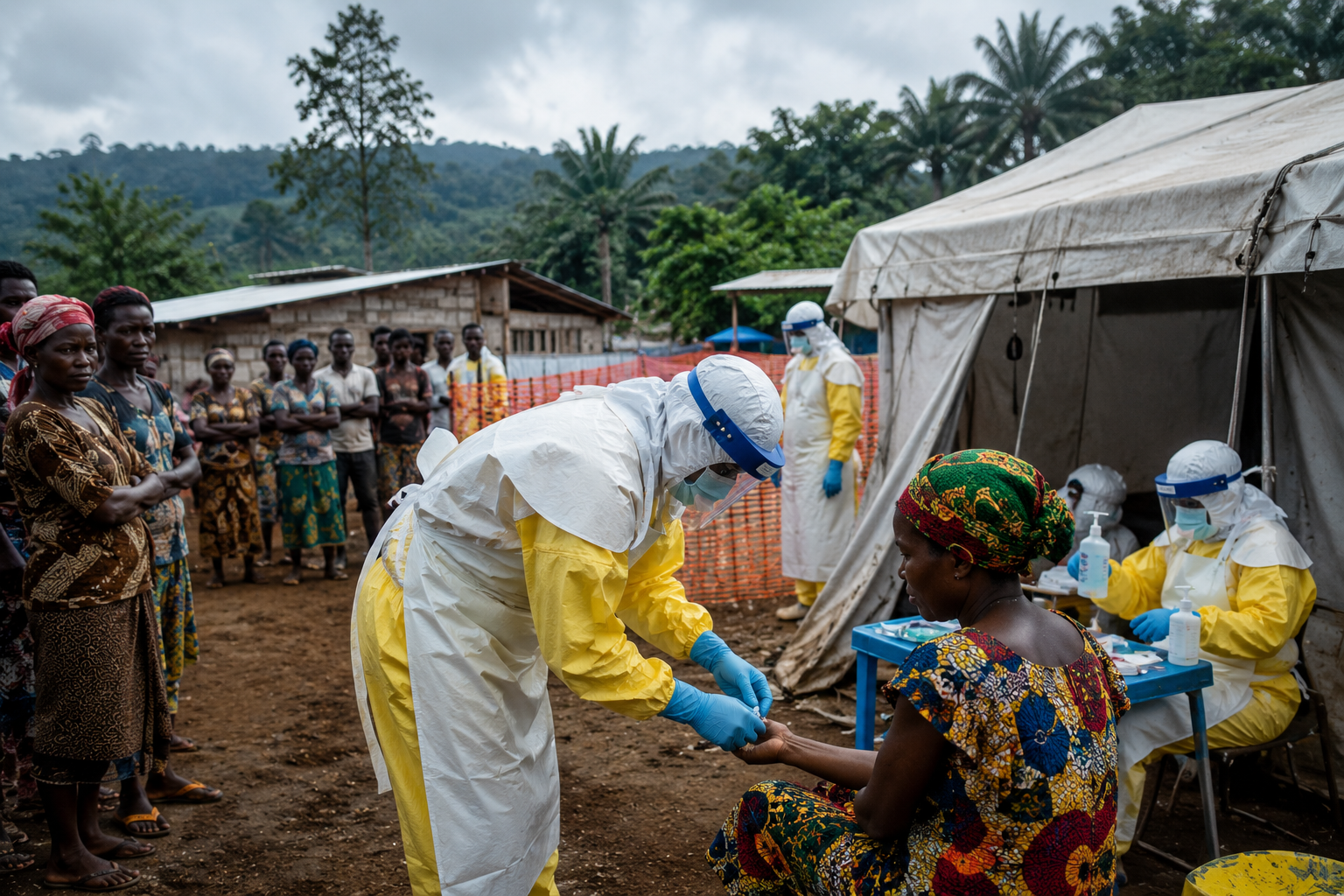

Ebola Virus Spread fears are growing again after new infections were reported in the Democratic Republic of Congo (DRC). Health officials are now racing to contain the outbreak before the deadly disease reaches more communities across the region.
The latest reports have raised international concern because Ebola remains one of the world’s most dangerous viral illnesses. The disease spreads quickly through direct contact and can cause severe symptoms, including bleeding, fever, and organ failure.
Authorities in the DRC, along with global health organizations, are working urgently to trace contacts, isolate patients, and stop further transmission.
Why the New Ebola Outbreak Matters: Ebola Virus Spread
Ebola outbreaks have affected Central Africa multiple times over the past several decades.
However, every new outbreak creates major concern because of the virus’s high fatality rate and rapid spread potential.
The DRC Has Experienced Ebola Before
The Democratic Republic of Congo has faced several Ebola outbreaks in previous years.
Health workers in the country already have experience handling emergency responses, but repeated outbreaks continue placing enormous pressure on medical systems and local communities.
Early Action Is Critical
Health experts consistently stress the importance of rapid containment.
If authorities isolate cases quickly and trace infected contacts early, they can reduce the risk of larger community transmission.
Delays, however, can make outbreaks much harder to control.
What Is Ebola Virus Disease?
Ebola is a severe viral illness that affects humans and some animals.
The virus was first identified in 1976 near the Ebola River in what is now the Democratic Republic of Congo.
Since then, multiple outbreaks have occurred across parts of Africa.
Common Ebola Symptoms
Symptoms often appear suddenly and may include:
- High fever
- Severe weakness
- Muscle pain
- Vomiting
- Diarrhea
- Internal or external bleeding
The disease can become life-threatening very quickly without supportive medical care.
How Ebola Spreads Between People: Ebola Virus Spread
Ebola spreads through direct contact with infected bodily fluids.
This includes contact with:
- Blood
- Saliva
- Sweat
- Vomit
- Urine
- Contaminated surfaces
The virus does not spread through casual airborne transmission like some respiratory diseases.
Healthcare Workers Face Higher Risk
Doctors, nurses, and caregivers often face elevated danger during outbreaks.
Without proper protective equipment, healthcare workers can become infected while treating patients.
That is why protective clothing, gloves, masks, and sanitation systems remain extremely important.
Why Containing Ebola Is So Difficult: Ebola Virus Spread
Several factors make Ebola outbreaks especially challenging to manage.
Remote Locations Slow Response Efforts
Some affected communities are located in remote regions with limited healthcare infrastructure.
Poor road access and weak communication systems can delay emergency medical responses.
Public Fear Can Create Problems
Fear and misinformation sometimes spread faster than the virus itself.
In some outbreaks, communities became suspicious of medical workers or resisted health measures because of confusion and distrust.
Public education therefore becomes a critical part of outbreak control.
Global Health Organizations Are Responding Quickly: Ebola Virus Spread
International health agencies have already increased monitoring efforts.
Organizations such as the World Health Organization (WHO) and local health authorities are coordinating emergency responses inside affected areas.
Contact Tracing Is a Major Priority
Health teams are now working to identify people who may have interacted with infected individuals.
This process, called contact tracing, helps authorities monitor potential cases before wider spread occurs.
Vaccination Campaigns Could Help: Ebola Virus Spread
Vaccines developed during previous Ebola outbreaks may help slow transmission.
Medical teams have used targeted vaccination strategies in earlier outbreaks with encouraging results.
These campaigns focus on vaccinating close contacts and high-risk groups.
The Human Impact Goes Beyond Infection Numbers: Ebola Virus Spread
Behind every outbreak are real families and communities facing fear and uncertainty.
Ebola outbreaks often disrupt:
- Schools
- Local businesses
- Healthcare services
- Daily transportation
- Community gatherings
Families can become isolated while caring for sick relatives or following quarantine rules.
Lessons Learned From Previous Ebola Crises
Past Ebola outbreaks taught global health systems several important lessons.
Fast Communication Saves Lives: Ebola Virus Spread
Quick reporting and transparent communication are essential during health emergencies.
Authorities now understand that early public awareness can reduce panic and improve cooperation.
Community Trust Is Essential
Medical responses work best when communities trust healthcare workers and local authorities.
During previous outbreaks, community engagement programs helped improve cooperation and vaccination efforts.
Why the World Continues Watching the DRC Closely: Ebola Virus Spread
The Democratic Republic of Congo remains vulnerable because of recurring outbreaks and healthcare challenges.
Global experts continue monitoring the situation carefully because infectious diseases can spread beyond borders if not contained rapidly.
Fortunately, medical knowledge and emergency response systems are far more advanced today than during earlier Ebola crises.
Scientists Continue Improving Ebola Treatments: Ebola Virus Spread
Medical research has improved significantly over the past decade.
Scientists now have:
- Better diagnostic tools
- Improved protective equipment
- More advanced vaccines
- Experimental treatments
These advances increase the chances of controlling future outbreaks more effectively.
Final Thoughts
The latest Ebola Virus Spread concerns in the Democratic Republic of Congo highlight how quickly dangerous infectious diseases can reappear and threaten vulnerable communities.
Although Ebola remains extremely serious, global health systems are now better prepared than in previous decades. Rapid response teams, contact tracing, vaccinations, and improved medical knowledge all provide important advantages in controlling outbreaks.
Still, the situation requires constant attention. Early containment, public cooperation, and international support will remain critical in preventing wider transmission.
As health officials continue working on the ground in the DRC, the world will be watching closely and hoping the outbreak can be controlled quickly and safely.
Read Other Interesting news here: College Financial Rankings