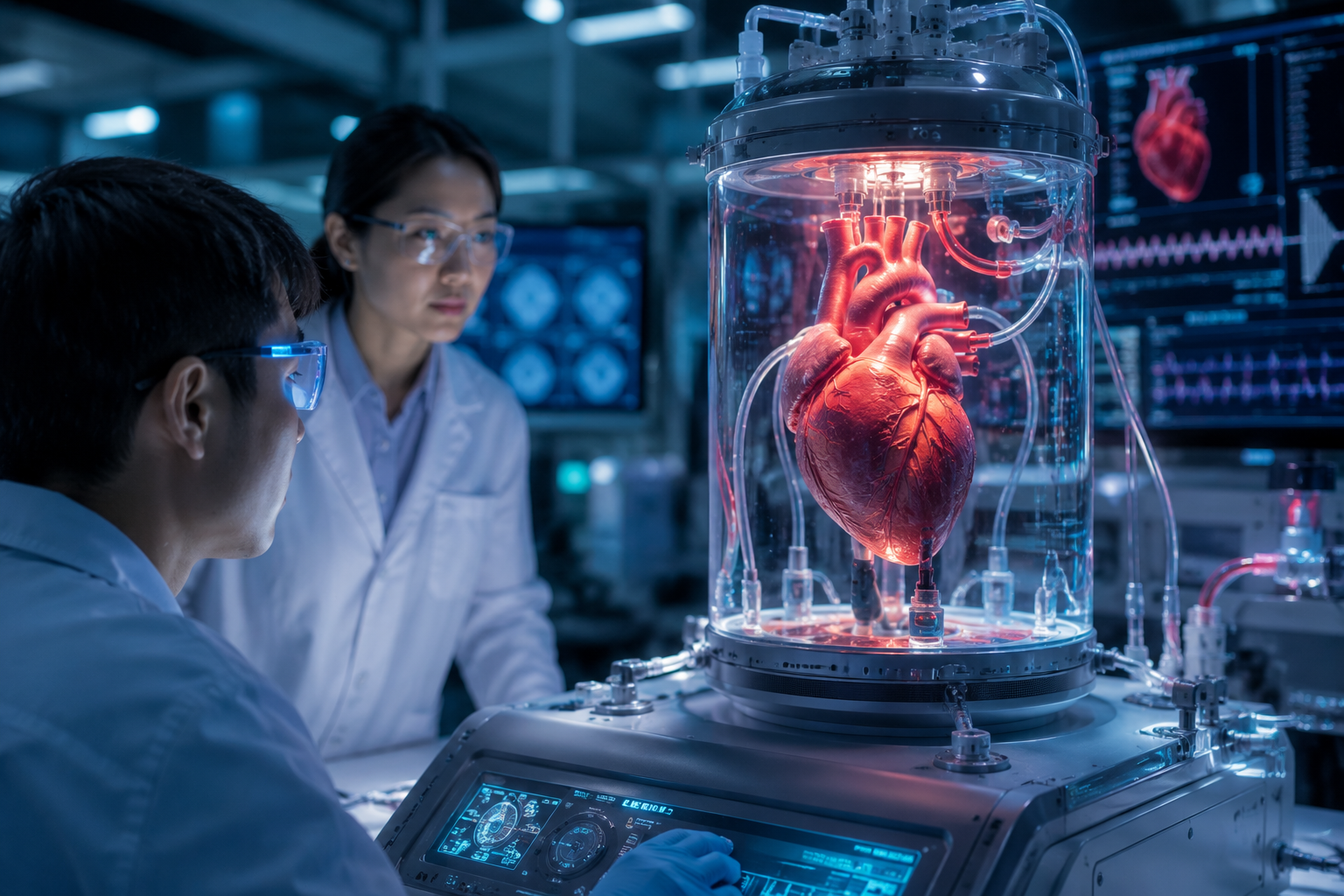

Artificial Heart Pacemaker research is creating major excitement after Chinese scientists announced a breakthrough involving lab-grown heart tissue with a built-in “master conductor” that may someday replace traditional pacemakers.
The new development focuses on recreating one of the heart’s most important natural systems, the biological signal center that controls heartbeat rhythm.
Researchers believe this technology could eventually help patients avoid mechanical pacemakers by using living tissue instead.
The breakthrough represents another important step in the rapidly growing field of regenerative medicine and bioengineered organs.
What Is an Artificial Heart Pacemaker?
Traditional pacemakers are small electronic devices implanted inside the body to regulate abnormal heart rhythms.
They help patients whose hearts beat too slowly or irregularly.
The new Chinese research explores a different idea entirely. Instead of relying on electronic devices, scientists are attempting to grow living heart tissue capable of controlling heartbeat naturally.
The Heart’s Natural “Master Conductor”
Inside the human heart is a special area called the sinoatrial node.
This tiny group of cells acts as the body’s natural pacemaker by generating electrical signals that control heartbeat rhythm.
Scientists involved in the new study focused on recreating this biological system within lab-grown heart tissue.
Why Scientists Want to Replace Mechanical Pacemakers: Artificial Heart Pacemaker
Mechanical pacemakers save millions of lives, but they also come with limitations.
Patients sometimes require battery replacements, surgeries, or device maintenance over time.
Researchers believe biological alternatives could eventually offer more natural heart regulation.
Current Pacemaker Challenges
Traditional pacemakers may involve:
- Surgical implantation
- Battery replacement procedures
- Risk of infection
- Hardware complications
- Device maintenance
A biological system could potentially reduce some of these long-term challenges.
How Chinese Scientists Created the Breakthrough: Artificial Heart Pacemaker
The research team reportedly developed heart tissue containing specialized pacing cells that behave similarly to the natural sinoatrial node.
These cells helped regulate contractions inside engineered heart tissue structures.
Combining Stem Cells and Bioengineering
The scientists used advanced bioengineering methods along with stem-cell-related techniques.
Their goal was to guide developing heart tissue into forming coordinated electrical rhythms naturally.
This required carefully controlling how cells communicated and synchronized with one another.
Mimicking Natural Heart Activity
One of the most impressive aspects of the study involved creating tissue that could maintain rhythmic beating patterns.
The engineered system acted similarly to the heart’s own internal electrical conductor.
That level of coordination represents a major challenge in regenerative heart science.
Why This Research Matters for Future Medicine: Artificial Heart Pacemaker
The potential impact extends far beyond pacemakers alone.
Scientists believe this research could support broader advances in:
- Heart repair
- Organ regeneration
- Personalized medicine
- Tissue engineering
- Advanced cardiac treatment
Heart Disease Remains a Global Problem
Heart disease continues ranking among the leading causes of death worldwide.
Millions of patients suffer from rhythm disorders and other cardiovascular conditions every year.
New treatment approaches could eventually improve survival rates and quality of life for many people.
The Growing Field of Lab-Grown Organs: Artificial Heart Pacemaker
Scientists around the world are increasingly exploring lab-grown tissues and organs.
Researchers hope these technologies may someday reduce dependence on donor organs and mechanical implants.
Regenerative Medicine Is Expanding Rapidly
Regenerative medicine focuses on repairing or replacing damaged tissues using biological approaches.
Recent advances include research involving:
- Artificial skin
- Engineered cartilage
- Lab-grown blood vessels
- Mini-organs called organoids
- Stem-cell therapies
The heart remains one of the most difficult organs to replicate because of its complexity and constant activity.
Major Challenges Still Remain: Artificial Heart Pacemaker
Even though the results are exciting, scientists caution that the technology remains in early stages.
Several major obstacles must still be solved before widespread medical use becomes possible.
Long-Term Stability Needs Testing
Researchers must confirm whether engineered pacing tissue can remain stable and safe for long periods inside the human body.
Human hearts operate continuously for decades, making durability extremely important.
Safety and Immune Response Concerns
Scientists also need to study:
- Immune system reactions
- Tissue compatibility
- Risk of abnormal rhythms
- Long-term integration with natural heart tissue
Extensive testing and clinical trials will be necessary before patient use.
China Is Investing Heavily in Advanced Medical Science: Artificial Heart Pacemaker
China has increased investment in biotechnology and medical research significantly over recent years.
The country is now competing aggressively in fields such as:
- Stem cell science
- Artificial intelligence
- Organ engineering
- Genetic medicine
- Biomedical technology
This latest heart research highlights China’s growing role in advanced scientific innovation.
Ethical Questions Will Also Shape the Future: Artificial Heart Pacemaker
As regenerative medicine advances, ethical discussions are becoming increasingly important.
Researchers and governments must carefully consider:
- Human testing rules
- Genetic manipulation concerns
- Access to expensive treatments
- Long-term safety standards
Balancing innovation with ethical oversight will remain essential.
Could Biological Pacemakers Become Reality?
Many scientists believe biological pacemakers could eventually become practical treatment options.
However, experts also warn that medical breakthroughs often require many years of development before reaching hospitals.
Still, the progress already achieved demonstrates how quickly regenerative heart science is evolving.
Final Thoughts
The latest Artificial Heart Pacemaker breakthrough from Chinese researchers offers a fascinating glimpse into the future of heart medicine. By developing lab-grown heart tissue with its own natural rhythm-control system, scientists are moving closer to treatments that may one day replace mechanical pacemakers entirely.
Although the technology still faces major scientific and regulatory hurdles, the research highlights the incredible speed of progress in regenerative medicine and bioengineering.
For millions of patients living with heart rhythm disorders, future biological therapies could someday provide more natural, long-lasting solutions.
As scientists continue refining these technologies, the future of cardiac treatment may look dramatically different from today’s traditional implant-based systems.
Read Other Interesting news here: Ebola Virus Spread