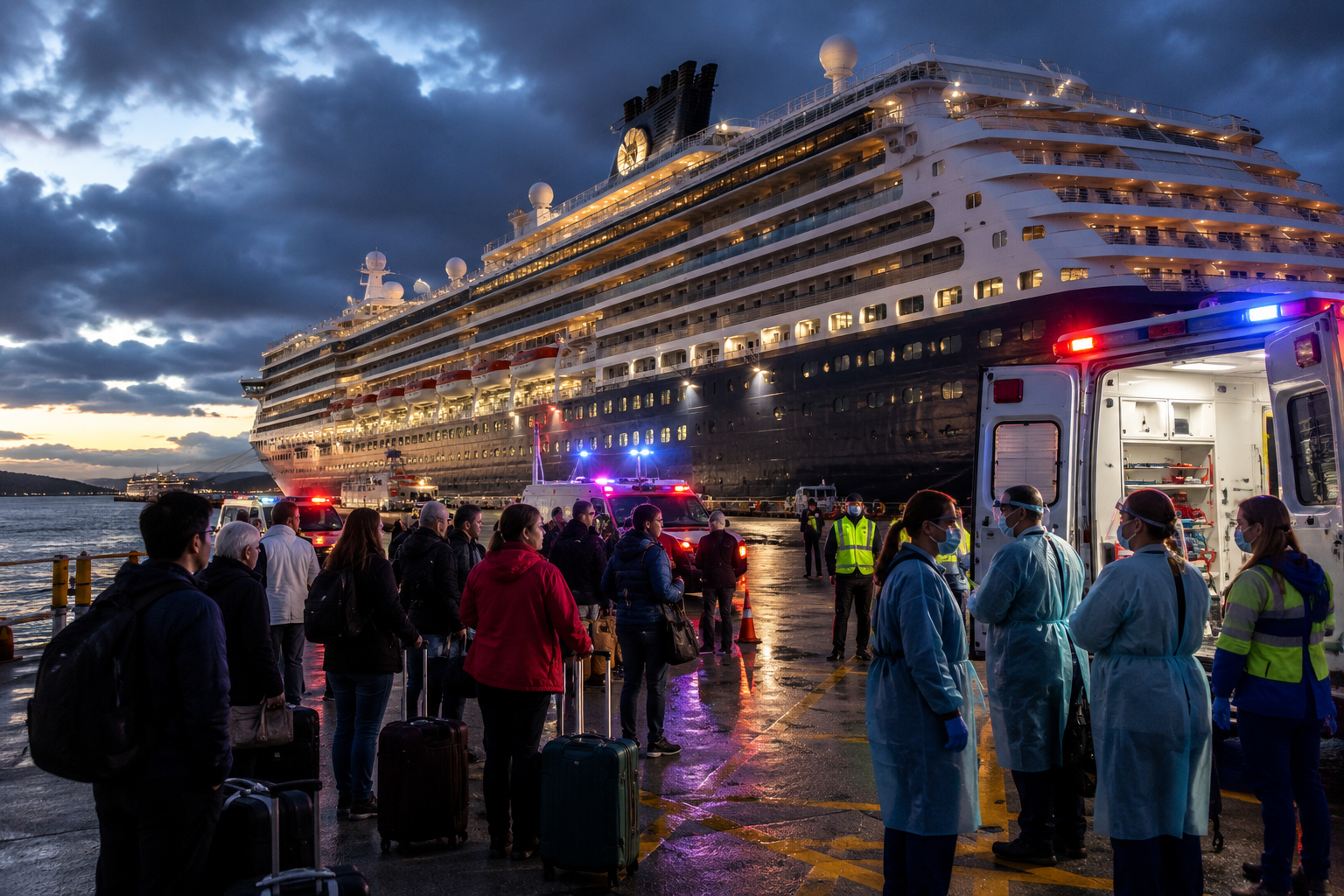

The recent Hantavirus Cruise emergency has sparked international concern after Australian authorities stepped in to help stranded citizens return home safely from a luxury cruise ship linked to a hantavirus outbreak.
What began as a luxury vacation quickly turned into a stressful and uncertain experience for passengers onboard the vessel. As health fears spread and authorities responded to the outbreak, many travelers found themselves isolated far from home while governments rushed to organize emergency support.
Australia later confirmed that it had chartered a special flight to bring affected nationals back safely.
The unfolding Hantavirus Cruise situation has now drawn global attention because it combines public health fears, international travel concerns, and emergency government action during a growing medical crisis.
What Happened During the Hantavirus Cruise Emergency
The Hantavirus Cruise situation began after concerns emerged about passengers potentially being exposed to hantavirus aboard a luxury cruise ship.
Hantavirus is a serious disease usually linked to rodents and rodent waste. Although cases remain relatively rare, the illness can become severe and dangerous if not treated quickly.
As health concerns increased, passengers aboard the cruise reportedly faced growing uncertainty about travel plans and medical safety.
Authorities moved quickly to assess the situation while governments worked with health officials and transport agencies to organize support for stranded citizens.
The growing seriousness of the Hantavirus Cruise incident eventually led Australia to arrange a charter flight for affected nationals.
Australia Steps In to Bring Citizens Home
Australian authorities responded rapidly once the Hantavirus Cruise situation became more serious.
The government confirmed it had organized a charter flight to help bring Australian citizens home safely from the affected luxury vessel.
That decision reflected rising concern about both passenger welfare and potential health risks connected to the outbreak.
Officials worked alongside health agencies and international authorities to coordinate the emergency response.
For many passengers, the rescue effort provided relief after days of uncertainty and anxiety.
The government’s involvement also highlighted how seriously officials were treating the Hantavirus Cruise emergency.
Public health safety quickly became the top priority throughout the operation.
Why the Hantavirus Cruise Story Drew Global Attention
The Hantavirus Cruise emergency quickly became international news because it combined several major concerns at once.
Luxury cruises are usually associated with relaxation, tourism, and entertainment. However, outbreaks onboard ships can rapidly create difficult health and logistical challenges.
Passengers often remain confined in close spaces, which increases anxiety whenever serious illness concerns emerge.
At the same time, international travel restrictions, medical procedures, and transport coordination can complicate emergency responses significantly.
The dramatic nature of the Hantavirus Cruise situation therefore captured attention worldwide.
Many travelers also began asking broader questions about cruise ship safety and emergency health preparedness.
Understanding Hantavirus and Its Health Risks
The Hantavirus Cruise incident also increased public curiosity about hantavirus itself.
Hantavirus infections are generally linked to exposure to infected rodents or contaminated environments.
According to health experts, symptoms may include:
- Fever
- Muscle aches
- Fatigue
- Breathing difficulties
- Headaches
Severe cases can lead to serious respiratory complications.
Although hantavirus cases are not extremely common, the disease is treated seriously because symptoms can worsen quickly in some patients.
The attention surrounding the Hantavirus Cruise outbreak has therefore encouraged many travelers to learn more about infectious disease risks during international travel.
Health officials continue monitoring the situation carefully while supporting affected passengers.
Cruise Ship Health Concerns Remain a Global Challenge
The recent Hantavirus Cruise emergency also highlights a larger issue involving health management aboard international cruise ships.
Cruise vessels operate like floating cities, carrying large numbers of passengers and crew members across multiple countries.
That environment can create challenges whenever illness outbreaks occur.
Medical teams onboard must balance:
- Passenger safety
- Isolation procedures
- International travel regulations
- Emergency transportation
- Communication with governments
The Hantavirus Cruise situation reminded many people how quickly travel emergencies can escalate even during luxury vacations.
In recent years, cruise operators have faced growing pressure to strengthen health monitoring and emergency response systems.
Passengers Faced Fear and Uncertainty
For many travelers aboard the Hantavirus Cruise, the experience became emotionally exhausting.
Passengers reportedly dealt with uncertainty surrounding medical risks, travel delays, and possible quarantine procedures.
Being far from home during a health emergency naturally increased anxiety for many families onboard.
The Australian government’s decision to organize a charter flight likely provided emotional reassurance for affected nationals.
Situations involving infectious disease concerns can quickly create panic if communication becomes unclear.
That is why authorities worked carefully to manage both public safety and passenger information during the Hantavirus Cruise response effort.
Governments Continue Monitoring International Health Risks
The Hantavirus Cruise emergency also reflects how governments worldwide remain highly alert to international health threats.
Global travel has made international movement faster and easier than ever before. However, it has also increased the speed at which health concerns can spread across borders.
As a result, governments continue investing heavily in:
- Emergency travel coordination
- Health screening systems
- Outbreak monitoring
- Medical response planning
- International cooperation
The rapid response during the Hantavirus Cruise situation demonstrated how governments now prioritize quick action whenever health risks emerge involving international travelers.
Officials continue working closely with medical experts to assess the situation carefully.
Public Reaction to the Hantavirus Cruise Situation
The Hantavirus Cruise incident quickly sparked major reactions online.
Many people expressed sympathy for passengers dealing with fear and uncertainty during what was supposed to be a luxury holiday.
Others praised Australian authorities for organizing emergency transportation to bring citizens home safely.
At the same time, the story triggered broader conversations about travel safety and health preparedness aboard cruise ships.
Social media discussions also reflected growing public awareness about infectious diseases and international travel risks.
The emotional nature of the Hantavirus Cruise story helped it gain widespread global attention very quickly.
5 Major Concerns Raised by the Hantavirus Cruise Emergency
1. Passenger Health Risks
Travelers faced uncertainty surrounding possible exposure to serious illness.
2. Emergency Travel Coordination
Authorities needed rapid international cooperation to organize passenger transport.
3. Cruise Ship Safety Questions
The incident renewed debate about outbreak management aboard large vessels.
4. Public Health Monitoring
Governments closely monitored the situation to prevent wider health risks.
5. Emotional Stress for Families
Passengers experienced fear and uncertainty while stranded far from home.
The Hantavirus Cruise Incident May Influence Future Travel Policies
The recent Hantavirus Cruise emergency may eventually influence future health and travel procedures across the cruise industry.
Governments and cruise companies may review:
- Medical response protocols
- Passenger screening systems
- Emergency evacuation plans
- Outbreak communication strategies
- International travel coordination policies
Health emergencies involving international travel often lead to stronger safety measures afterward.
The attention surrounding the Hantavirus Cruise situation could therefore shape future discussions about global travel preparedness and passenger protection.
Final Thoughts
The dramatic Hantavirus Cruise emergency transformed what should have been a luxury holiday into a stressful international health situation.
As Australian authorities organized rescue flights for stranded citizens, the incident highlighted the challenges governments and health officials face during sudden travel-related outbreaks.
The situation also reminded travelers how quickly global health concerns can affect international tourism and transportation.
While officials continue monitoring passenger safety and medical conditions carefully, the Hantavirus Cruise story has already become an important example of how emergency coordination and public health response remain critical in today’s interconnected world.
Read Other Interesting news here: Saudi Aramco Profits