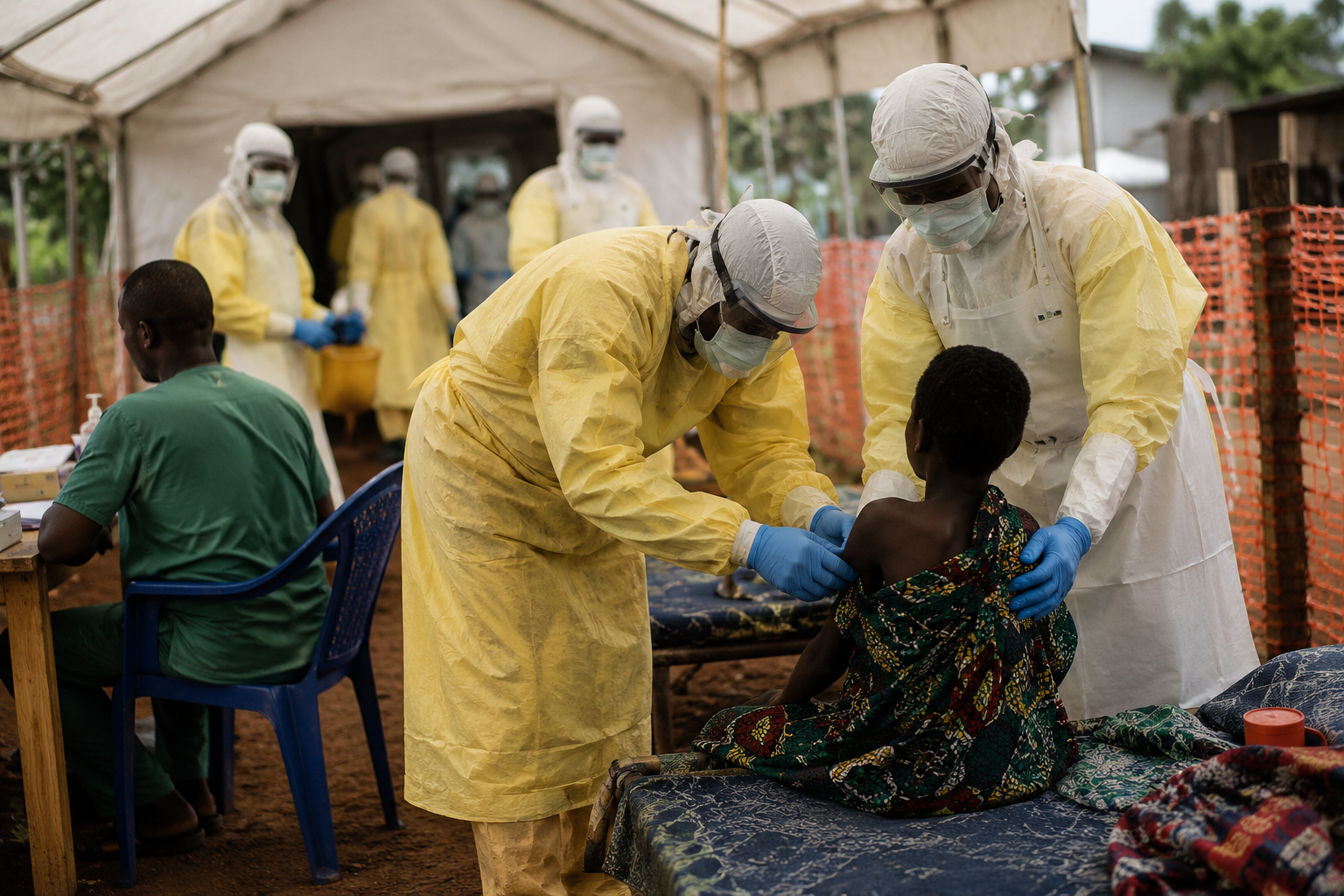

The world’s attention has once again turned toward Central Africa after the growing DRC Ebola outbreak emergency raised serious global health concerns.
The World Health Organization (WHO) officially declared the Ebola outbreak in the Democratic Republic of Congo (DRC) a global health emergency as officials work urgently to contain the deadly virus.
Health experts fear the outbreak could become harder to control if rapid action is not taken quickly enough.
For many people, the announcement immediately revived memories of past Ebola crises that placed enormous pressure on healthcare systems and created fear across multiple countries.
This time, international health organizations are trying to respond faster while using lessons learned from earlier outbreaks.
Why the WHO Declared a Global Emergency: DRC Ebola outbreak emergency
The WHO only issues a global health emergency declaration during highly serious situations.
This classification is designed to mobilize international support, funding, medical resources, and emergency coordination.
The current DRC Ebola outbreak emergency triggered concern because Ebola remains one of the world’s deadliest infectious diseases.
Health officials are especially worried about regional movement, limited healthcare access in some communities, and the possibility of further spread across borders.
The declaration is meant to encourage rapid global cooperation before the outbreak becomes more severe.
What Makes Ebola So Dangerous?
Ebola is a highly infectious viral disease that spreads through direct contact with infected bodily fluids.
Symptoms can include:
- Fever
- Severe fatigue
- Vomiting
- Muscle pain
- Diarrhea
- Internal bleeding
The disease can become life-threatening very quickly without proper medical treatment.
One major challenge during any DRC Ebola outbreak emergency is how rapidly the virus can spread within families and healthcare settings if safety measures are not followed carefully.
That is why medical teams focus heavily on protective equipment, isolation procedures, and fast detection systems.
The DRC Has Faced Multiple Ebola Outbreaks Before: DRC Ebola outbreak emergency
The Democratic Republic of Congo has dealt with Ebola outbreaks several times in the past.
Because the virus naturally exists in parts of Central Africa, outbreaks can emerge under certain conditions.
However, every outbreak creates different challenges depending on:
- Population movement
- Healthcare infrastructure
- Access to treatment
- Community trust
- Regional security conditions
Previous outbreaks helped improve response systems, but experts say the latest situation still presents major difficulties.
The current DRC Ebola outbreak emergency is placing enormous pressure on local healthcare workers and medical facilities.
Frontline Healthcare Workers Are Leading the Response
Doctors, nurses, and emergency response teams are now working around the clock to slow transmission.
Health officials are focusing on several important strategies:
- Identifying infected individuals
- Contact tracing
- Isolating confirmed cases
- Providing supportive medical care
- Launching vaccination campaigns
- Educating local communities
These efforts are critical for controlling the outbreak before it spreads further.
Healthcare workers often face difficult and dangerous conditions during Ebola emergencies, especially in areas with limited medical resources.
Contact Tracing Remains One of the Most Important Tools
Contact tracing plays a major role in outbreak control.
Medical teams attempt to identify anyone who may have interacted with infected patients.
This allows health workers to monitor high-risk individuals and reduce further transmission.
Fast contact tracing can significantly improve containment efforts during a DRC Ebola outbreak emergency.
Community Trust Is Essential
Public cooperation also plays a critical role.
During earlier outbreaks, misinformation and fear sometimes created resistance toward medical teams.
Experts now emphasize clear communication and community engagement to build trust with local populations.
When communities cooperate with health officials, vaccination and containment efforts become far more effective.
Cross-Border Risks Are Increasing Concern
One reason the WHO acted quickly is because the outbreak involves areas connected to neighboring countries.
Cross-border movement can increase the risk of regional transmission if infected individuals travel before symptoms are detected.
Neighboring countries are now strengthening:
- Health screenings
- Border monitoring
- Emergency preparedness systems
- Surveillance efforts
The goal is to quickly identify possible cases before wider transmission occurs.
International coordination remains extremely important during the DRC Ebola outbreak emergency.
Vaccines and Treatments Have Improved
One important difference compared to earlier Ebola outbreaks is the availability of better medical tools.
Vaccines and treatment methods have improved significantly over recent years.
This gives health officials stronger resources for controlling the outbreak.
Vaccination campaigns are now being used to help protect:
- Healthcare workers
- High-risk contacts
- Vulnerable communities
Medical researchers and global health organizations continue improving treatment strategies as well.
These advancements may help reduce fatalities and improve outbreak control efforts.
Why Global Health Experts Are Taking This Seriously
Ebola outbreaks demand immediate international attention because delays can quickly worsen the situation.
The WHO declaration signals that the DRC Ebola outbreak emergency requires coordinated international support.
Global organizations are now working to strengthen:
- Emergency funding
- Medical staffing
- Vaccine distribution
- Disease surveillance
- Healthcare logistics
Public health experts believe early action remains the best way to prevent larger outbreaks.
Lessons learned from previous Ebola crises continue shaping response strategies today.
The Social and Economic Impact Can Be Severe
Ebola outbreaks affect much more than healthcare systems alone.
Communities facing outbreaks often experience:
- Economic disruption
- Travel restrictions
- School closures
- Reduced business activity
- Increased public fear
Local economies can struggle when people avoid travel, public gatherings, or commercial activity.
The longer the DRC Ebola outbreak emergency continues, the more pressure communities may face socially and economically.
Global Healthcare Systems Still Face Challenges
The outbreak also highlights larger weaknesses within global healthcare systems.
Many countries still struggle with:
- Limited medical infrastructure
- Unequal healthcare access
- Emergency preparedness gaps
- Limited vaccine availability
Public health experts continue calling for stronger international cooperation to improve future outbreak responses.
The current situation serves as another reminder of how quickly infectious diseases can become global concerns.
Why Accurate Public Information Matters
Clear communication is extremely important during health emergencies.
Medical experts encourage the public to rely on trusted health information instead of rumors or misinformation shared online.
Public awareness can help people understand:
- How Ebola spreads
- Which symptoms to watch for
- When to seek medical attention
- Why containment measures are necessary
Accurate information also helps reduce unnecessary panic during outbreaks.
Final Thoughts
The growing concern surrounding the DRC Ebola outbreak emergency highlights how quickly infectious diseases can become serious international threats.
The WHO’s global health emergency declaration reflects the urgency of the situation and the importance of rapid international cooperation.
Healthcare workers, governments, and global organizations are now working urgently to contain the outbreak and prevent wider spread.
While improved vaccines and response systems offer hope, major challenges still remain in affected regions.
For the global health community, this outbreak serves as another important reminder that preparedness, medical investment, and international coordination remain essential in fighting dangerous diseases.
Read Other Interesting news here: Cindy Crawford Gucci Gown