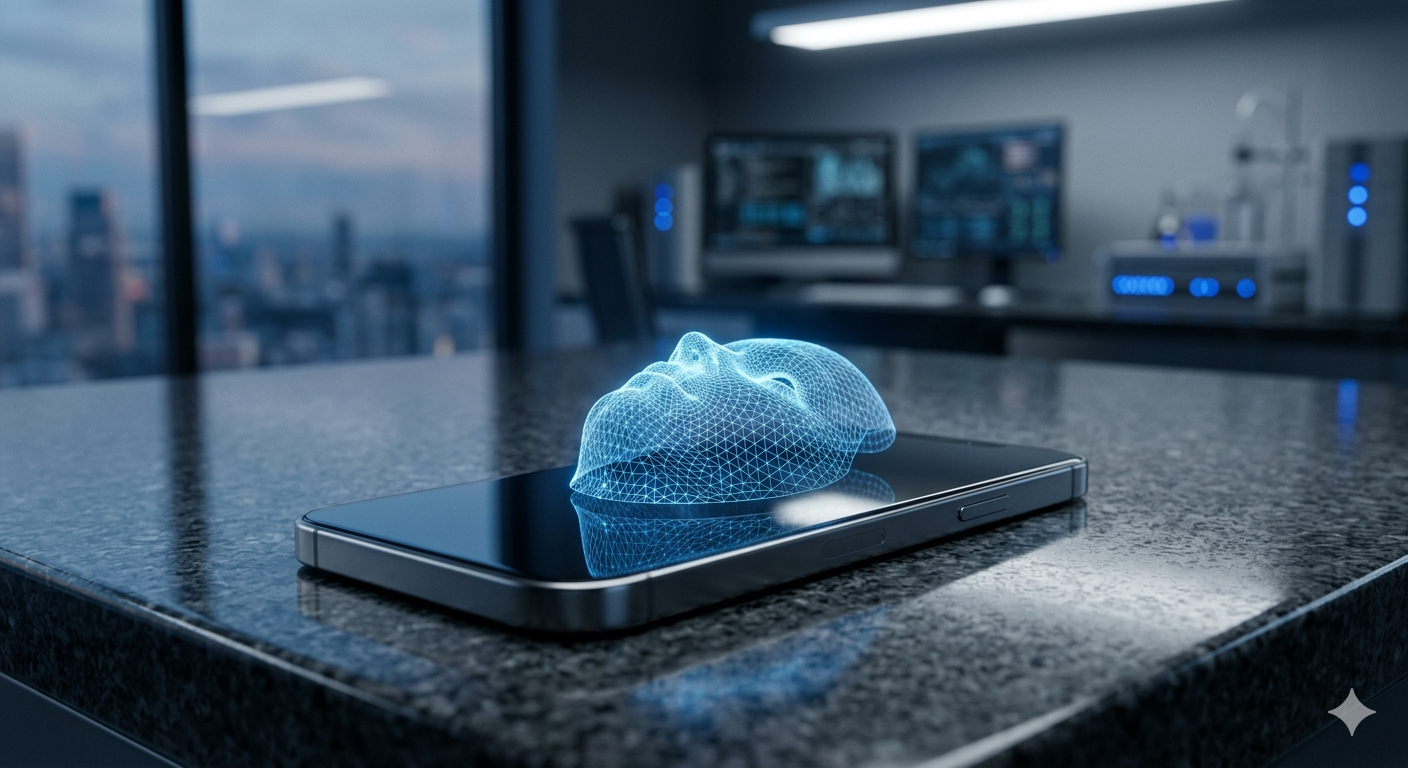

Imagine holding a piece of tech that recognizes your face in a fraction of a second. Every single day, millions of people glance at their smartphones to unlock screens, authorize payments, and access deeply personal data.
At the center of this modern convenience sits Apple Face ID technology. It feels like magic, but it is actually driven by highly complex hardware and software systems.
Since its introduction, Apple Face ID technology has completely transformed how we view mobile security. However, a fascinating and somewhat dark question has started making waves globally. What happens to this biometric shield when a user passes away? Can a smartphone secured by facial recognition be accessed after the owner is gone?
To understand the boundaries of this security, we have to look closely at how the entire system operates under the hood.
The Origins of Advanced Facial Recognition: Apple Face ID technology
Tech giant Apple introduced this game-changing security feature nearly nine years ago to change mobile authentication forever. It officially replaced the older fingerprint scanning system, known as Touch ID, on premium devices.
The revolutionary technology made its grand debut with the famous iPhone X. Since that initial launch, the company has constantly refined and updated the system.
Today, this premium security feature is standard all the way up to the latest iPhone 17 series. Over nearly a decade, the mechanism has become much faster, more secure, and highly accurate.
Following this massive success, many other smartphone brands launched their own versions of facial recognition. Yet, the proprietary system designed for iOS devices remains one of the most advanced setups in the commercial world.
How Apple Face ID Technology Maps Your Face: Apple Face ID technology
The true power of this authentication system lies in its sophisticated hardware layout hidden at the top of your screen. It does not just snap a simple flat photograph of your face. Instead, it builds a highly detailed three-dimensional map using invisible light beams.
Understanding the inner workings of Apple Face ID technology helps clarify why it remains so resilient against unauthorized access attempts.
The Power of the TrueDepth Camera
The heavy lifting is performed by a specialized array called the TrueDepth camera system. This setup consists of multiple sensors working in perfect harmony within a tiny screen cutout.
When you glance at your phone, a flood illuminator coats your face with invisible infrared light. This allows the system to recognize your presence even in pitch-black rooms or low-light conditions.
Next, a specialized dot projector goes to work. It beams more than 30,000 invisible infrared dots directly onto your skin to analyze the unique contours of your face.
Mathematical Modeling and Safety
An infrared camera captures the specific pattern made by those tens of thousands of dots. The device then translates this visual data into a highly complex mathematical model.
The smartphone compares this fresh mathematical data against the biometric profile you set up during initial configuration. If the two models match perfectly, your device opens immediately.
According to official documentation, devices like iPhones and iPads hold massive amounts of private digital information. Because our entire lives are stored on these gadgets, building top-tier protective systems remains extremely vital for user safety.
The Real-World Legal Drama in Sri Lanka: Apple Face ID technology
While the tech works flawlessly in daily life, an unexpected legal battle recently put its absolute security to the test. This incident sparked intense debates across the global tech community and legal circles alike.
The Case of Kapila Chandrasena
The conversation erupted following the passing of a prominent high-profile executive. Reports surfaced regarding the tragic death of the former Sri Lankan Airlines CEO, Kapila Chandrasena.
During a sensitive official investigation, local authorities desperately needed to access the late executive’s mobile device to gather crucial evidence. Investigators tried multiple methods to look inside the smartphone but hit an immediate roadblock.
The Ultimate Security Stand-Off
Official court records later revealed that investigators could not bypass the device’s security. The phone remained completely locked because it was strictly protected by biometric authentication instead of a standard written password.
Because the system held strong, the investigators could not force their way into the data. This intense standoff eventually forced authorities to take official legal action.
The investigators formally requested the local court to allow specialized technical assistance. They sought help directly from the manufacturing corporation and external tech authorities to try and crack open the device.
Can Face ID Be Tricked After a Person Dies?
The legal drama in Sri Lanka highlighted a frustrating truth about biometrics. Can someone simply hold an iPhone up to a deceased person’s face to gain entry?
The short answer is no, you cannot easily trick the system this way. The modern version of this biometric tool requires a live user to function properly.
The system is built with an optional but highly recommended feature called “Require Attention.” This means the software specifically checks if the user is conscious, alert, and looking directly at the display.
If a person’s eyes are completely closed, or if they are looking away, the camera array refuses to unlock. Because a deceased individual cannot consciously give attention or open their eyes naturally, the facial scanning process fails.
Why Passcodes Still Rule the Security Hierarchy: Apple Face ID technology
Even though facial scanning is incredibly advanced, the traditional alphanumeric passcode remains the ultimate master key for iOS devices. The system is designed to fall back on your password under specific security rules.
For instance, if a smartphone has not been unlocked for more than 48 hours, the biometric system automatically disables itself. A user must type in their manual code to reactivate the sensors.
Furthermore, restarting the phone completely locks down the biometric hardware. The very first unlock after a fresh reboot always requires the alphanumeric passcode.
This layered architecture is exactly why the investigators in the Sri Lankan court case found themselves stuck. Without the physical passcode or a living user, the hardware remains an unbreakable digital vault.
Protecting Digital Legacies for the Future: Apple Face ID technology
As our smartphones collect more sensitive data, planning for life after death has become a major topic for technology companies. Protecting personal privacy while allowing family access is a delicate balancing act.
To solve this dilemma without compromising device security, developers have introduced alternative digital legacy programs. These tools allow users to appoint trusted individuals who can request access to cloud data after they pass away.
However, this access does not mean cracking open the physical phone. It simply allows loved ones to download allowed data from cloud servers, leaving the physical device completely secure.
Final Thoughts: Apple Face ID technology
The continuous evolution of Apple Face ID technology shows how far mobile data protection has come since the days of the iPhone X. It beautifully balances extreme everyday convenience with military-grade privacy features.
As the historic legal case involving Kapila Chandrasena proves, these biometric walls are incredibly tough to break, even for formal government investigations. The system’s reliance on active user attention ensures that your personal data remains safe from unauthorized eyes, no matter the circumstances.
Do you rely entirely on facial recognition, or do you still trust traditional passcodes more? Take a moment today to explore your smartphone’s privacy menu and ensure your legacy security settings are fully updated.
Read Other Interesting news here: Oil Prices Jump