
The global semiconductor race is heating up like never before. Tech brands are pouring billions of dollars into research and development to gain independence from third-party manufacturers.
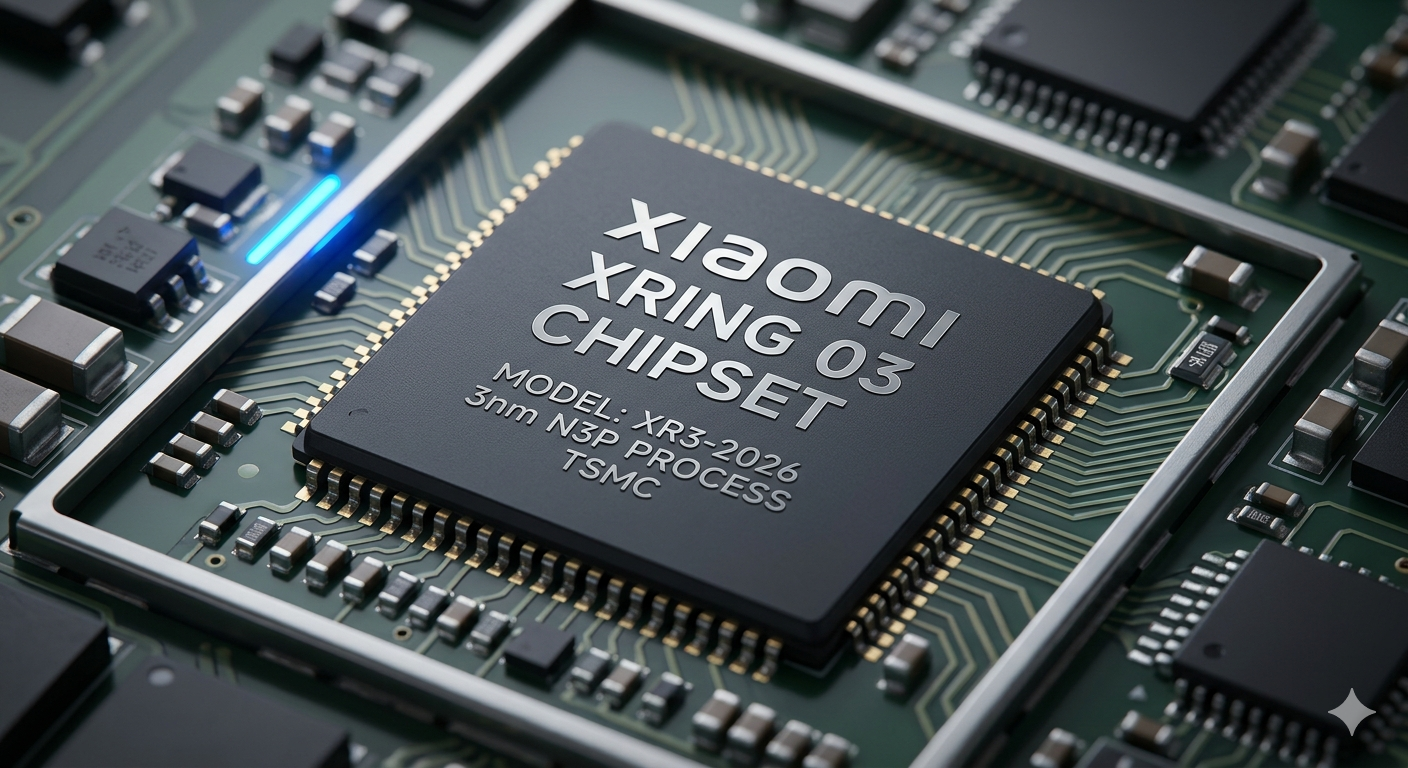
At the center of this movement is a massive announcement regarding the custom Xiaomi XRING 03 chipset. The company has officially broken its silence on the upcoming processor, creating a wave of excitement across the smartphone industry.
During a corporate event, a high-ranking executive proudly confirmed that this next-generation, in-house silicon will make its official debut later this year. For fans of custom hardware, this sounds like a massive victory.
However, beneath the surface of this announcement lies a massive architectural obstacle. A serious technological disadvantage could make this entire release feel outdated from day one.
To see why this hardware strategy faces a steep uphill battle, we have to look closely at the manufacturing processes shaping the current premium mobile landscape. Integrating the custom Xiaomi XRING 03 chipset into the market requires balancing raw power with modern production efficiency.
The Surprise Confirmation From Corporate Leadership: Xiaomi XRING 03 chipset
The official confirmation came directly from the very top of the manufacturing corporation. Lu Weibing, the President of Xiaomi Group, publicly revealed that the new custom silicon is firmly on track for an official launch.
This announcement represents a fast-forward in the company’s hardware roadmap. The tech giant previously shook the market with its original XRING 01 processor.
Interestingly, tech enthusiasts noticed that the brand seems to be jumping past the rumored XRING 02 for its main mobile lineup, pushing the Xiaomi XRING 03 chipset straight into the spotlight.
By designing its own processors, the enterprise wants to reduce its heavy reliance on silicon partners like Qualcomm and MediaTek. Building custom silicon allows a brand to deeply optimize its operating system and create an integrated product ecosystem. Moving forward with the Xiaomi XRING 03 chipset strategy highlights the brand’s long-term goal of complete hardware self-reliance.
The 3nm Node Dilemma Explained
Every silicon breakthrough is defined by its lithography. The smaller the nanometer node, the more transistors engineers can cram onto a piece of silicon, resulting in faster performance and better battery conservation.
Sticking to the N3P Process
According to detailed supply chain reports, the upcoming Xiaomi XRING 03 chipset will be manufactured using TSMC‘s 3nm lithography. More specifically, the design is expected to utilize the third-generation N3P node from the semiconductor plant.
This is a step up from the older XRING 01, which relied on the second-generation N3E process. While the upgrade will bring noticeable performance boosts, it leaves the architecture trailing behind the true cutting-edge technology of the year.
The Race to the 2nm Next-Gen Node
The real problem lies in what the rest of the industry is doing. Major rivals like Apple, Qualcomm, and MediaTek are not slowing down their production lines.
These competitor brands are moving full steam ahead to mass-produce their premium chipsets on TSMC‘s ultra-advanced 2nm process. This generational gap means the new custom Xiaomi XRING 03 chipset will technically lag behind the curve right at launch.
The Exorbitant Financial Cost of Going Smaller
Why would a tech giant willingly choose an older manufacturing process for its brand-new hardware? The answer comes down to pure economics and skyrocketing production budgets.
Astounding Wafer Prices
Stepping up to a brand-new node requires an astronomical amount of capital. Industry estimates suggest that a single 2nm silicon wafer from TSMC costs upwards of $30,000.
On top of that, corporations must spend millions of additional dollars just for the initial tape-out process to verify the physical test silicon. For a brand that balances multiple product categories, this is an incredibly expensive gamble.
Smartphone Price Pressures
Sticking with the 3nm node allows the company to shield consumers from aggressive retail price hikes. Component costs for mobile components are rising rapidly across the globe.
Top-tier rival processors, such as the upcoming Snapdragon 8 Elite Gen 6 Pro, are projected to cost phone manufacturers more than $300 per unit. By relying on a mature node, the enterprise can keep its bills of materials under control. Opting out of the premium node pricing keeps the development of the Xiaomi XRING 03 chipset commercially viable.
Looking Inside the Expected Specifications
Because the brand is avoiding the expensive transition to a smaller node, engineers are focusing heavily on architectural layout tweaks to squeeze out extra power.
Clock Speeds and Core Layouts
Early leaks from database code teardowns show that the Xiaomi XRING 03 chipset will likely feature an optimized three-cluster CPU design. The main high-performance core is tipped to reach a blistering clock speed of 4.05 GHz.
The system will also utilize high-performance titanium cores running at 3.42 GHz, alongside efficiency cores clocked at 3.02 GHz. This layout aims to maximize processing power without draining a phone battery instantly.
Graphics and Memory Capabilities
On the visual side, the upcoming processor is expected to pack an updated GPU running at a peak clock speed of 1.5 GHz. This is a solid increase over the 1.2 GHz peak found on the older XRING 01.
Furthermore, the memory architecture will maintain a highly capable bandwidth speed of 9600 MT/s. Rather than building completely custom CPU designs from scratch, the company is expected to adopt standard blueprints from ARM to keep development smooth.
Expanding the Silicon Into Smart Vehicles
Even with a distinct node disadvantage in the smartphone market, the Xiaomi XRING 03 chipset has a secret weapon up its sleeve. The processor is not just being built for mobile devices and tablets.
The enterprise is actively evaluating the custom silicon for integration into its rapidly growing automotive lineup. Using an in-house chip inside intelligent vehicles opens up massive possibilities for a seamless ecosystem.
However, putting custom silicon into cars takes a lot more time because automotive safety standards require incredibly strict verification steps. If the enterprise succeeds, it could form a unified digital network that connects your phone, your home, and your car perfectly. This multi-platform flexibility could completely redefine how consumers interact with the custom Xiaomi XRING 03 chipset ecosystem.
Final Thoughts
The official confirmation of the Xiaomi XRING 03 chipset by Lu Weibing marks an ambitious milestone for the Chinese tech giant. It highlights a serious determination to achieve true component independence in a crowded tech market.
Unfortunately, remaining on TSMC‘s older 3nm manufacturing node instead of jumping to the 2nm generation presents a clear bottleneck. It will prevent the custom silicon from directly trading blows with upcoming flagship giants like the Snapdragon 8 Elite Gen 6 Pro or Apple‘s future A20 lineup.
Would you buy a premium device powered by an in-house chip if it was a generation behind the competition? Share your thoughts on this semiconductor battle, and stay tuned for more tech updates by subscribing to our newsletter!
Read Other Interesting news here: Apple Face ID Technology