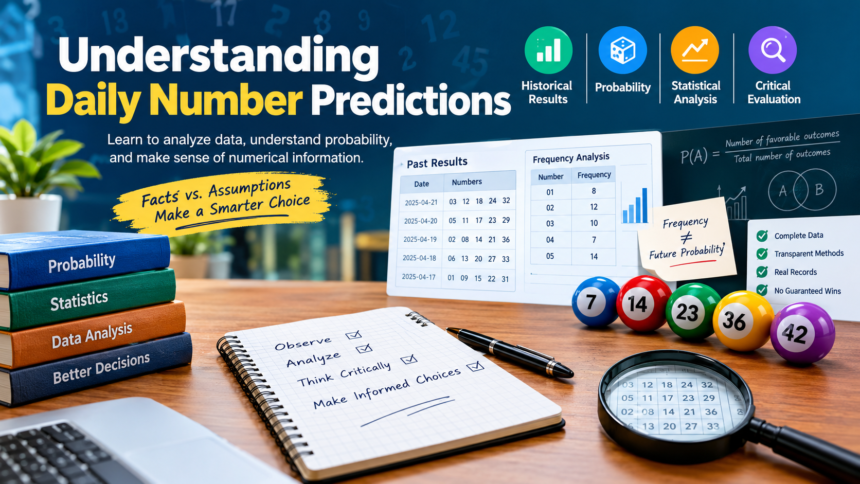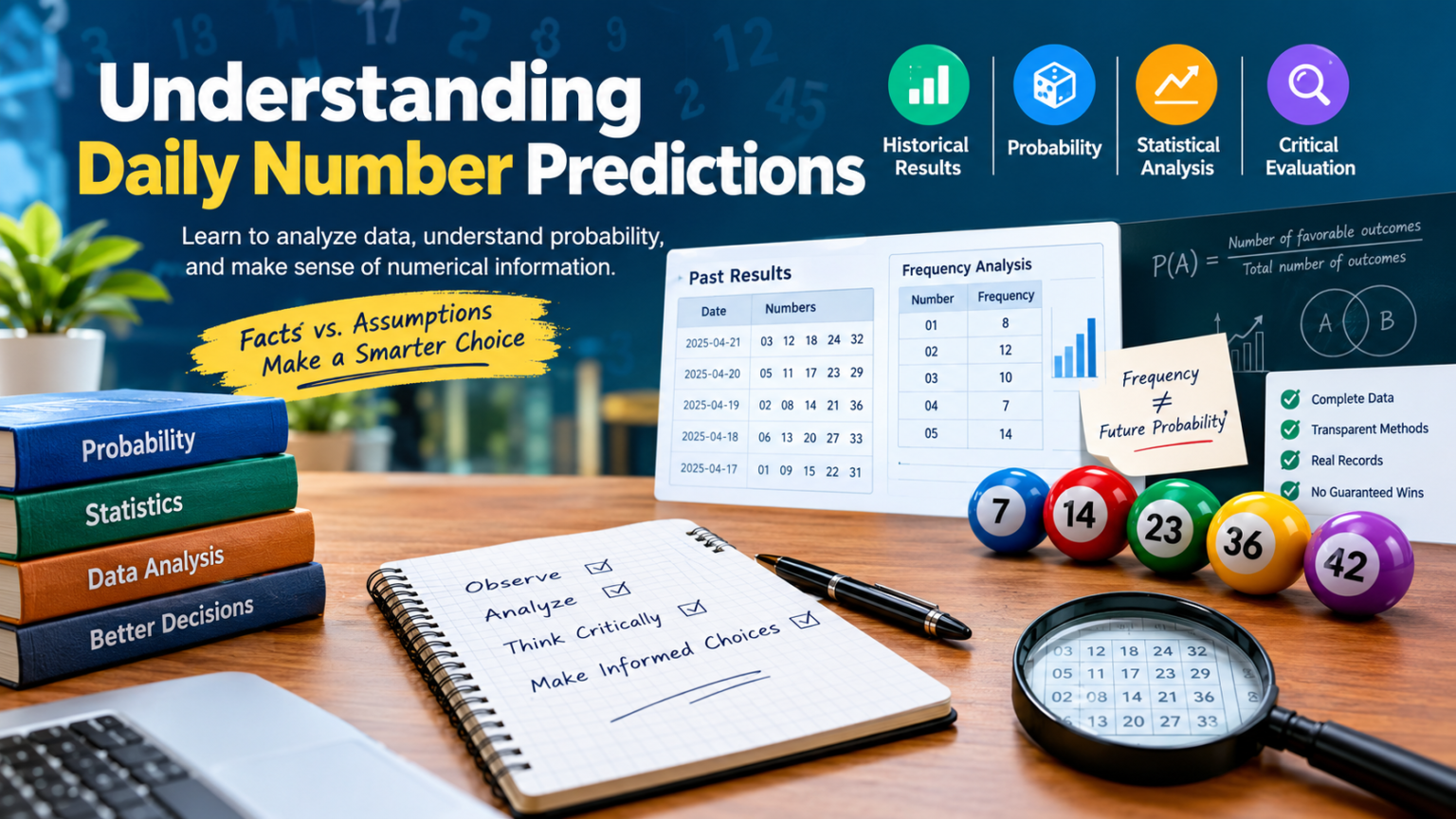

Understanding daily number predictions requires a basic knowledge of numerical data, probability, and statistical interpretation. Beginners often encounter prediction lists, historical records, and discussions about recurring numbers without knowing how these materials should be evaluated. Learning to distinguish recorded facts from assumptions helps readers interpret numerical information more carefully.
Understanding the Basics of Number Predictions
Number predictions are estimates about possible outcomes in a future draw. They may be developed through observations of previous results, numerical comparisons, or individual interpretations of available information. However, a prediction remains an estimate rather than a confirmed outcome.
The first step for beginners is to understand the difference between historical results and future possibilities. Historical results document events that have already occurred, whereas predictions describe expectations about events that have not yet taken place. These categories should not be confused when examining numerical information.
A list of suggested numbers may look precise, but its presentation does not establish its accuracy. Readers should consider how the information was produced, what evidence supports the interpretation, and whether the source clearly explains its limitations.
How to Examine Historical Results
Historical results provide a record of previous outcomes and can be organized by date, category, or numerical combination. Reviewing these records helps readers understand how information is collected and presented over a particular period.
One common method involves counting how frequently individual numbers appear within a dataset. This process produces a frequency table that summarizes past observations. For example, a number appearing several times within a selected period can be identified as relatively frequent in that specific dataset.
However, frequency does not automatically indicate future probability. A number that appeared repeatedly in earlier draws is not necessarily more likely to appear in the next independent draw. Likewise, a number that has not appeared for an extended period is not automatically due to appear.
When examining information associated with Alexistogel, readers should identify whether the material contains historical records, statistical summaries, or speculative estimates. Recognizing these distinctions prevents different types of information from being interpreted as equivalent evidence.
Recognizing Patterns and Statistical Limitations
People naturally search for patterns when examining sequences of numbers. Repeated digits, similar combinations, and apparent changes in frequency can attract attention, particularly when a dataset contains many observations.
Nevertheless, random data can produce patterns without any underlying predictive relationship. A sequence may appear meaningful simply because people are more likely to notice unusual repetitions than ordinary results.
Sample size also influences statistical interpretation. A small collection of results may show substantial variation, while a larger dataset can provide a broader picture of historical frequencies. Even then, past observations cannot guarantee that future results will follow the same distribution over a short period.
Another important consideration is selection bias. This occurs when someone chooses only the records that support a particular belief while ignoring observations that contradict it. Examining complete datasets and using consistent criteria helps reduce this problem.
Evaluating Prediction Sources
Different sources present numerical predictions using different methods and levels of detail. Some provide dates, historical records, and explanations of their analytical approach. Others publish suggested combinations without explaining how those numbers were selected.
When reviewing information from a Bandar Togel source, readers should examine whether the material clearly distinguishes predictions from verified results. Claims about accuracy should be supported by transparent records rather than isolated examples or unsupported statements.
It is also important to check publication dates and the completeness of the information. Outdated schedules, missing records, and inconsistent reporting can lead to incorrect interpretations. Comparing published results with independently documented records can help identify discrepancies.
Readers should be particularly cautious when a source describes a numerical combination as certain to win. Statistical analysis cannot establish certainty about outcomes generated by a genuinely random drawing process.
Understanding Probability and Independent Events
Probability describes the likelihood of an event occurring under defined conditions. In a fair draw, the probability of a particular outcome depends on the rules, the number of possible outcomes, and whether the drawing process is independent.
For independent events, previous outcomes do not change the probability of a subsequent event. For example, if a particular result has not appeared in several consecutive draws, that absence alone does not make it more likely to occur in the next draw.
This principle helps explain why historical patterns should not be mistaken for reliable forecasting methods. Statistical summaries describe observed information, while probability models explain the likelihood of possible outcomes under specified assumptions.
Understanding this distinction allows beginners to evaluate numerical claims more objectively and recognize the limitations of prediction techniques.