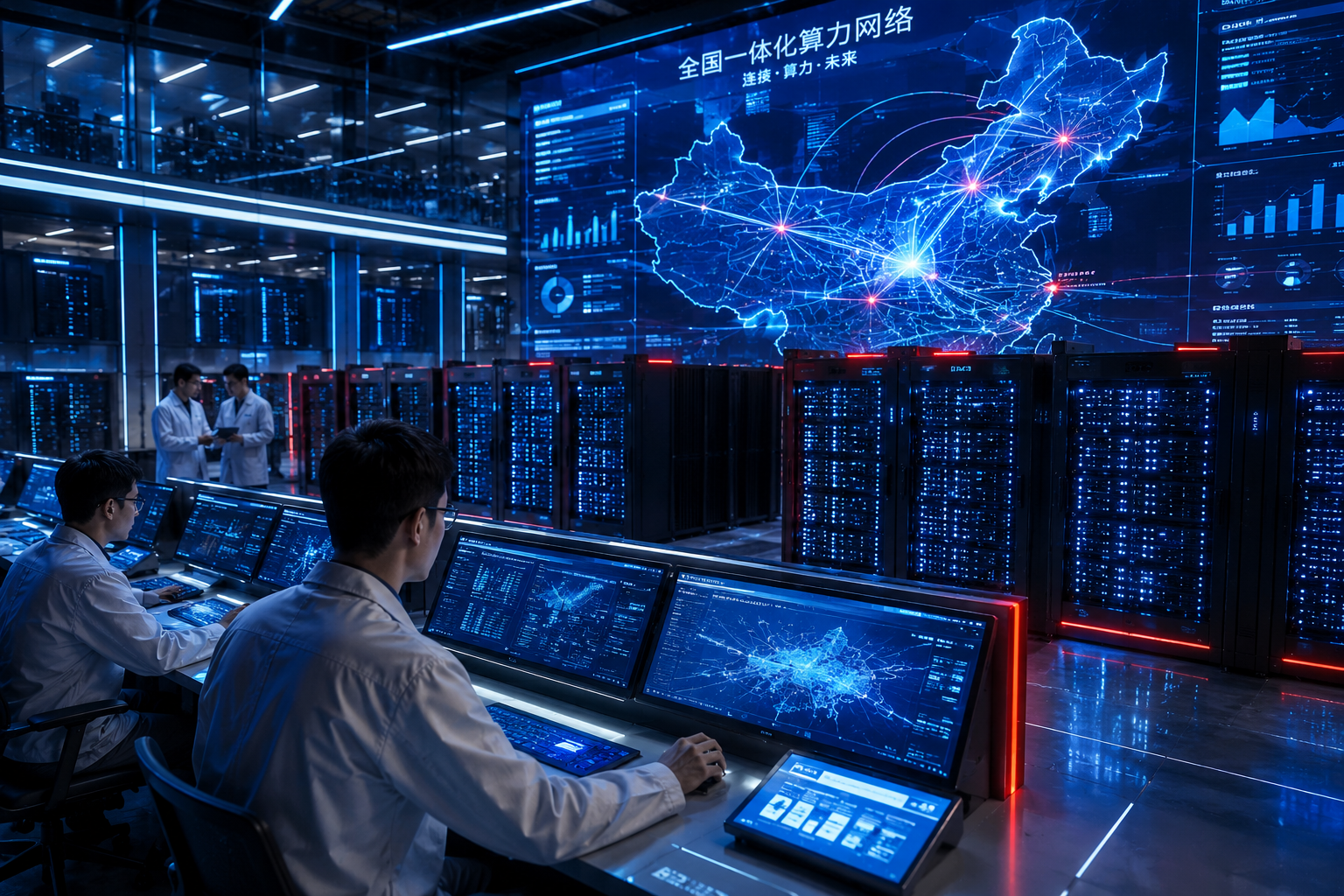

China is moving aggressively to strengthen its digital future, and the country’s growing computing power network is becoming a major part of that strategy.
As artificial intelligence demand continues rising across the world, countries are racing to secure stronger computing infrastructure. China is now investing heavily in nationwide systems that can support advanced AI models, cloud services, and massive data processing.
The goal is clear. China wants to build a smarter and more connected digital backbone capable of supporting the next generation of artificial intelligence technologies.
This push is not only about technology companies. It is also about economic growth, industrial development, and global competition in the AI era.
Why China Is Expanding Its Computing Power Network: computing power network
Artificial intelligence systems require enormous computing resources.
Every AI chatbot, image generator, language model, and recommendation engine depends on high-performance servers and data centers. As millions of users interact with AI tools daily, the demand for computing power keeps increasing rapidly.
That is why China is investing aggressively in its national computing power network.
The country wants to connect computing resources across different regions so businesses can access processing power more efficiently.
Officials believe computing infrastructure could become one of the most important foundations of the future digital economy.
AI Token Demand Is Growing Fast: computing power network
One major reason behind this expansion is the sharp rise in AI token demand.
AI tokens are units of data processed when artificial intelligence systems generate responses, images, translations, or other outputs.
As AI usage grows, token demand continues climbing at a massive scale.
This creates heavy pressure on computing systems.
Chinese technology companies now require stronger infrastructure to keep AI services operating smoothly. Without enough computing power, AI systems become slower and more expensive to run.
The expanding computing power network is designed to help solve that problem.
China Wants a Unified National Infrastructure
China’s strategy goes far beyond building individual data centers.
Instead, the country is creating a nationwide network capable of distributing computing resources more effectively.
Connecting Western and Eastern Regions
Some western parts of China have cheaper electricity and more available land for large data centers.
Meanwhile, eastern cities generate much higher demand for AI services and cloud computing.
China wants to connect these regions through advanced digital infrastructure.
This approach could help improve efficiency while lowering operational costs.
Improving Resource Utilization
Reports suggest some Chinese data centers currently operate below their full capacity.
A stronger national computing power network could help businesses use available resources more efficiently instead of constantly building new facilities.
This may reduce waste and improve overall performance.
The AI Race Is Becoming More Competitive
The expansion of China’s computing infrastructure also reflects growing competition in global artificial intelligence development.
Countries around the world now see AI as a critical technology for future economic and industrial leadership.
China and the United States are both investing heavily in:
- Artificial intelligence
- Semiconductor development
- Cloud infrastructure
- Advanced computing systems
- Quantum technologies
China believes strong computing infrastructure will play a major role in staying competitive in the long term.
That is why the country continues pushing forward with its national computing power network strategy.
Chinese Technology Companies Need More Computing Power
Many Chinese technology firms are rapidly expanding their AI operations.
Businesses across multiple industries are developing:
- Large language models
- AI cloud platforms
- Smart manufacturing systems
- Automation technologies
- Machine learning applications
All these systems require powerful computing resources.
The growing computing power network could help Chinese companies scale AI services faster and more efficiently.
AI Training Requires Massive Infrastructure
Modern AI systems require enormous processing capacity during training.
Some advanced models need thousands of high-performance chips operating continuously for long periods.
This is one reason why data centers have become such valuable assets in the technology industry.
China’s infrastructure investments show how seriously the country views future AI development.
Major Challenges Still Exist
Even with strong momentum, building a nationwide computing system remains difficult.
Several major challenges still need solutions.
Latency Problems
Distance can affect response speed.
If computing resources are too far from users, AI services may experience delays. This becomes especially important for real-time applications.
Balancing performance and efficiency remains a key challenge.
High Energy Consumption
Artificial intelligence infrastructure consumes huge amounts of electricity.
As China expands its computing power network, energy demand will likely continue rising sharply.
This creates pressure on both energy systems and sustainability goals.
Compatibility Issues
Different data centers often use different hardware systems and software standards.
Connecting them into one unified network requires strong coordination and technical standardization.
Without consistent standards, efficiency problems could increase.
Why This Matters for the Global AI Industry
China’s computing infrastructure expansion could influence the global technology market in several ways.
First, stronger infrastructure may help Chinese companies develop more advanced AI systems faster.
Second, increased computing capacity could accelerate innovation across industries such as healthcare, finance, manufacturing, and cloud services.
Third, global demand for AI infrastructure may continue driving investment in semiconductors, networking equipment, and large data centers worldwide.
The rapid growth of China’s computing power network shows how important computing infrastructure has become in the modern economy.
Investors Are Watching the Sector Closely
The AI infrastructure market is attracting growing investor interest.
Companies connected to the following industries could benefit from rising computing demand:
- Data centers
- AI chips
- Cloud computing
- Networking equipment
- Energy infrastructure
Many analysts believe the AI infrastructure market may continue expanding for years as artificial intelligence adoption grows globally.
China’s nationwide infrastructure strategy could become one of the most important technology investment trends of the decade.
Final Thoughts
China’s expanding computing power network highlights how quickly artificial intelligence is reshaping the global technology industry.
The country is not simply building more servers. It is creating a national digital infrastructure system designed to support long-term AI growth and advanced computing needs.
As AI demand continues rising, computing power is becoming one of the world’s most valuable resources.
While challenges such as energy consumption, latency, and system compatibility still remain, China’s aggressive infrastructure strategy shows how seriously the country is preparing for the future.
For investors, developers, and technology companies, the growth of China’s computing infrastructure will remain an important trend to watch in the years ahead.
Read Other Interesting news here: Quantum Computing Stock