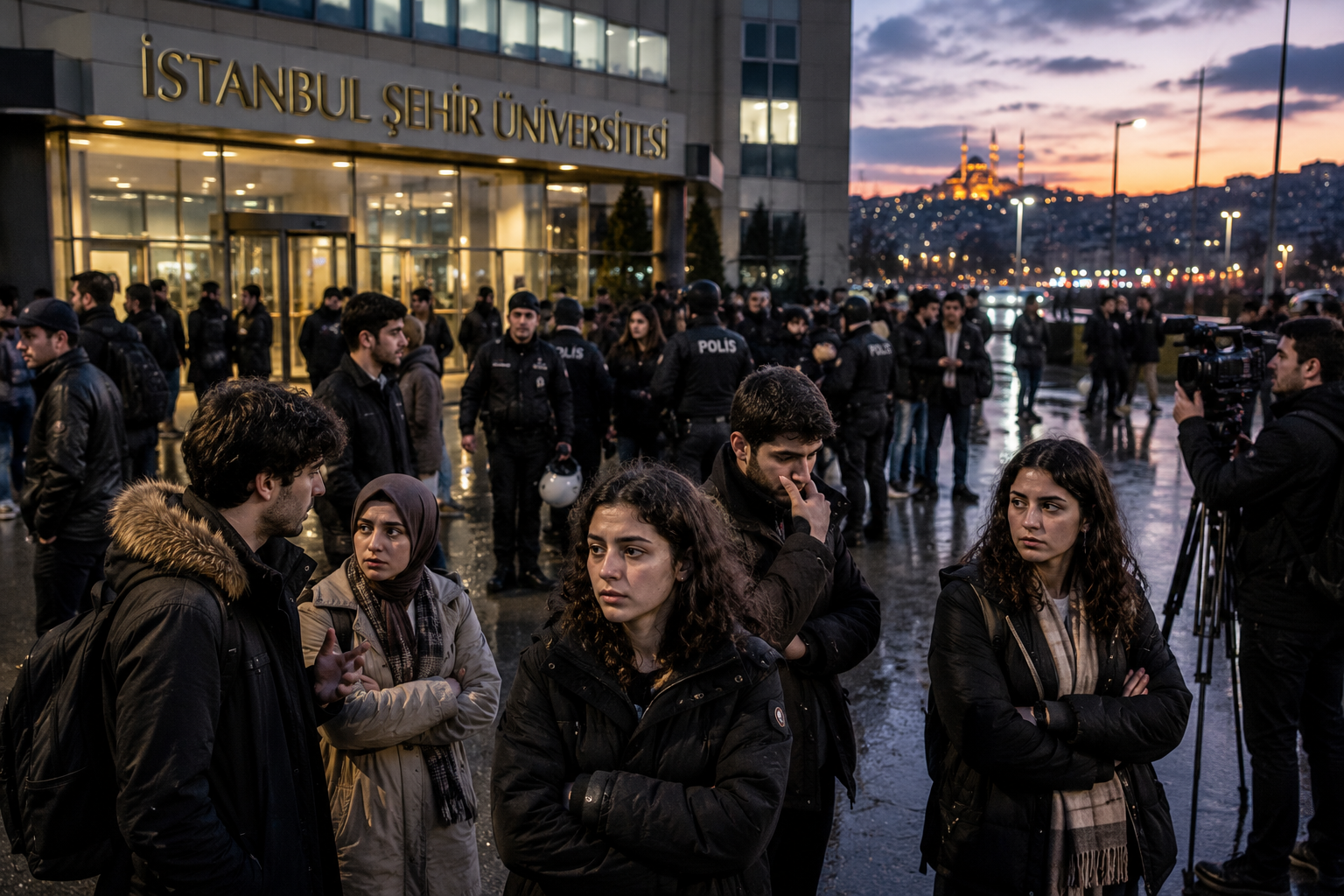

Istanbul University Closure discussions are spreading rapidly after Turkish authorities shut down a private university in Istanbul that had already been seized as part of a criminal investigation.
The decision has triggered intense reactions across Türkiye’s education sector, political circles, and civil society groups. Many students and academics are now uncertain about their future after the institution suddenly lost the ability to continue operating.
The university at the center of the controversy is Istanbul Sehir University, a liberal private institution once linked to former Turkish Prime Minister Ahmet Davutoglu.
Authorities officially closed the university after earlier taking control of it during a financial and legal investigation.
Why the Istanbul University Closure Happened: Istanbul University Closure
Turkish authorities stated that the university’s closure was connected to an ongoing criminal probe.
The institution had previously been transferred to state control after financial disputes involving loans and debts.
Officials argued that the university’s management failed to meet financial obligations tied to public banking institutions.
Financial Disputes Became Central
The crisis reportedly intensified after disputes involving loans from Halkbank, a state-owned Turkish bank.
Authorities accused the university foundation of financial irregularities linked to unpaid debts.
The government later appointed trustees to manage the institution before ultimately shutting it down.
The Political Background Behind the Controversy: Istanbul University Closure
The closure quickly became politically sensitive because of the university’s past connections.
Ahmet Davutoglu’s Link to the Institution
Former Prime Minister Ahmet Davutoglu played an important role in the university’s founding.
Davutoglu later became a political rival of Turkish President Recep Tayyip Erdogan after leaving the ruling AK Party.
That political split increased public debate surrounding the university’s treatment.
Critics Raised Questions About Motives
Some opposition figures and rights advocates questioned whether political tensions influenced the closure decision.
Government officials denied such accusations and maintained that the case focused strictly on legal and financial matters.
The situation nevertheless deepened concerns about political pressure within Turkish institutions.
Students Suddenly Faced an Uncertain Future: Istanbul University Closure
For students, the closure created immediate anxiety.
Thousands of young people suddenly faced uncertainty about:
- Continuing their degrees
- Transferring credits
- Housing arrangements
- Tuition payments
- Academic records
Many students worried about how the disruption could affect future careers and educational plans.
Transfer Plans Became Necessary
Authorities later discussed moving students to other universities so they could continue their studies.
However, transitions of this scale often create logistical and emotional difficulties for students and faculty members alike.
Some students also feared losing the academic environment that originally attracted them to the university.
Istanbul Sehir University Had Built a Strong Reputation
Before the controversy, Istanbul Sehir University earned recognition for its academic programs and liberal educational atmosphere.
The university attracted students interested in social sciences, political studies, international relations, and humanities.
Many academics viewed it as an important intellectual space within Türkiye’s higher education system.
International Connections Increased Its Profile
The institution also developed partnerships and international academic relationships.
These connections helped attract global attention after the closure announcement became public.
International observers expressed concern about how the decision could affect academic freedom and educational diversity.
Concerns About Academic Freedom Grew Stronger
The closure revived broader debates about academic independence in Türkiye.
Critics argued that universities must remain protected spaces for intellectual discussion and research.
Universities Play a Critical Social Role
Higher education institutions often shape public debate, scientific progress, and cultural development.
When universities face political or legal pressure, many people fear long-term damage to open academic discussion.
That concern became a major part of public reactions surrounding the Istanbul University closure.
Türkiye Has Seen Similar Institutional Crackdowns Before
The closure did not happen in isolation.
Türkiye has experienced multiple institutional investigations and shutdowns over the past decade, especially after the failed coup attempt in 2016.
Authorities launched large-scale operations targeting organizations accused of financial crimes, terrorism links, or anti-state activities.
The Government Defends Its Actions
Turkish officials consistently argue that such measures are necessary for national security and legal accountability.
The government says investigations follow judicial procedures and target unlawful activity rather than political beliefs.
However, critics continue raising concerns about transparency and proportionality.
International Attention Focused on Türkiye Again
The university closure attracted attention from global media organizations and human rights groups.
Many observers viewed the situation as part of a broader conversation about democratic institutions and civil freedoms in Türkiye.
Education and Politics Often Intersect
Universities frequently become centers of political and social debate.
Because of this, decisions involving educational institutions can quickly gain national and international significance.
The Istanbul case became another example of how education and politics can become deeply connected.
The Human Side of the Story Matters Most
Behind the political arguments and legal discussions are real students, professors, and families.
Many people invested years building academic careers, friendships, and futures connected to the university.
For them, the closure was not simply a political headline. It became a deeply personal disruption affecting daily life and long-term plans.
Final Thoughts
The ongoing Istanbul University Closure controversy highlights how education, politics, finance, and public trust can become tightly connected during times of national tension.
Authorities insist the shutdown followed legal and financial investigations. At the same time, critics continue questioning the broader implications for academic freedom and institutional independence in Türkiye.
For students and faculty members, the impact remains deeply personal. Their futures, careers, and educational paths were suddenly thrown into uncertainty.
As the debate continues, the case will likely remain an important topic inside Türkiye and beyond, especially for people closely watching the future of higher education and civil society in the country.
Read Other Interesting news here: Quantum Sound Research